Educational Resource Platform
Course:
Scope:
Industry:
Year:
UX/UI – Estonian Academy of Arts
UX research, concept, Figma prototype
Academic
2024 – 2025
This project was developed in a three-member team within a course of 6 months. The target was to address some current social issue.
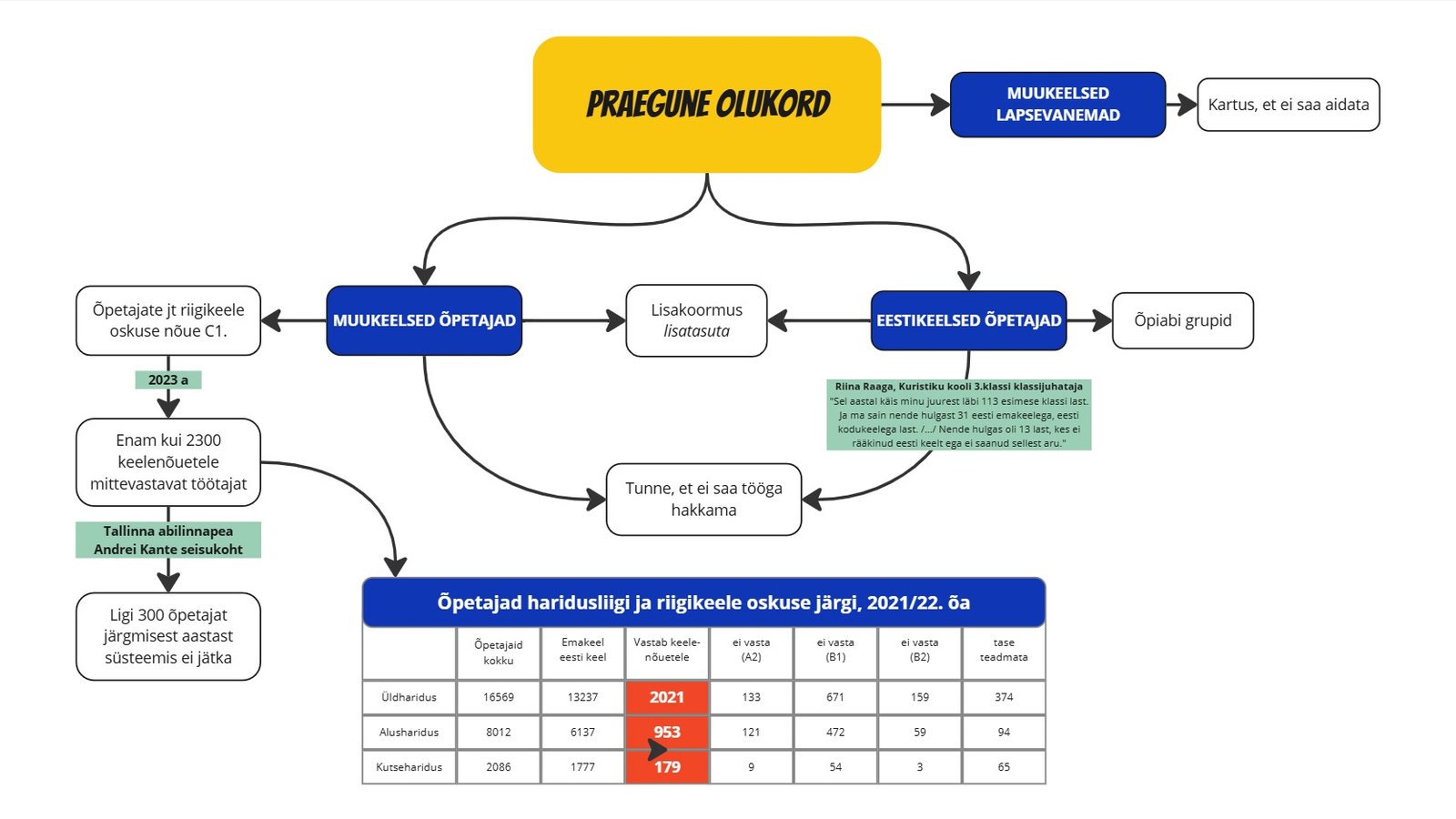
We set out to research a hot topic within the field of education – the country’s transition to education fully in Estonian. There are hundreds of non-native school teachers in Estonia, most of whom are speaking Russian. As they have to adopt to teaching in Estonian, they are facing challenges, which may result in a decrease of the quality of education.
COURSE: UX/UI – Estonian Academy of Arts
SCOPE: UX research, concept, Figma prototype
INDUSTRY: Academic
YEAR: 2024 – 2025
This project was developed in a three-member team. We set out to address a real social issue and chose to focus on Russian-speaking schoolteachers in Estonia, who face challenges as the country transitions to education fully in Estonian.
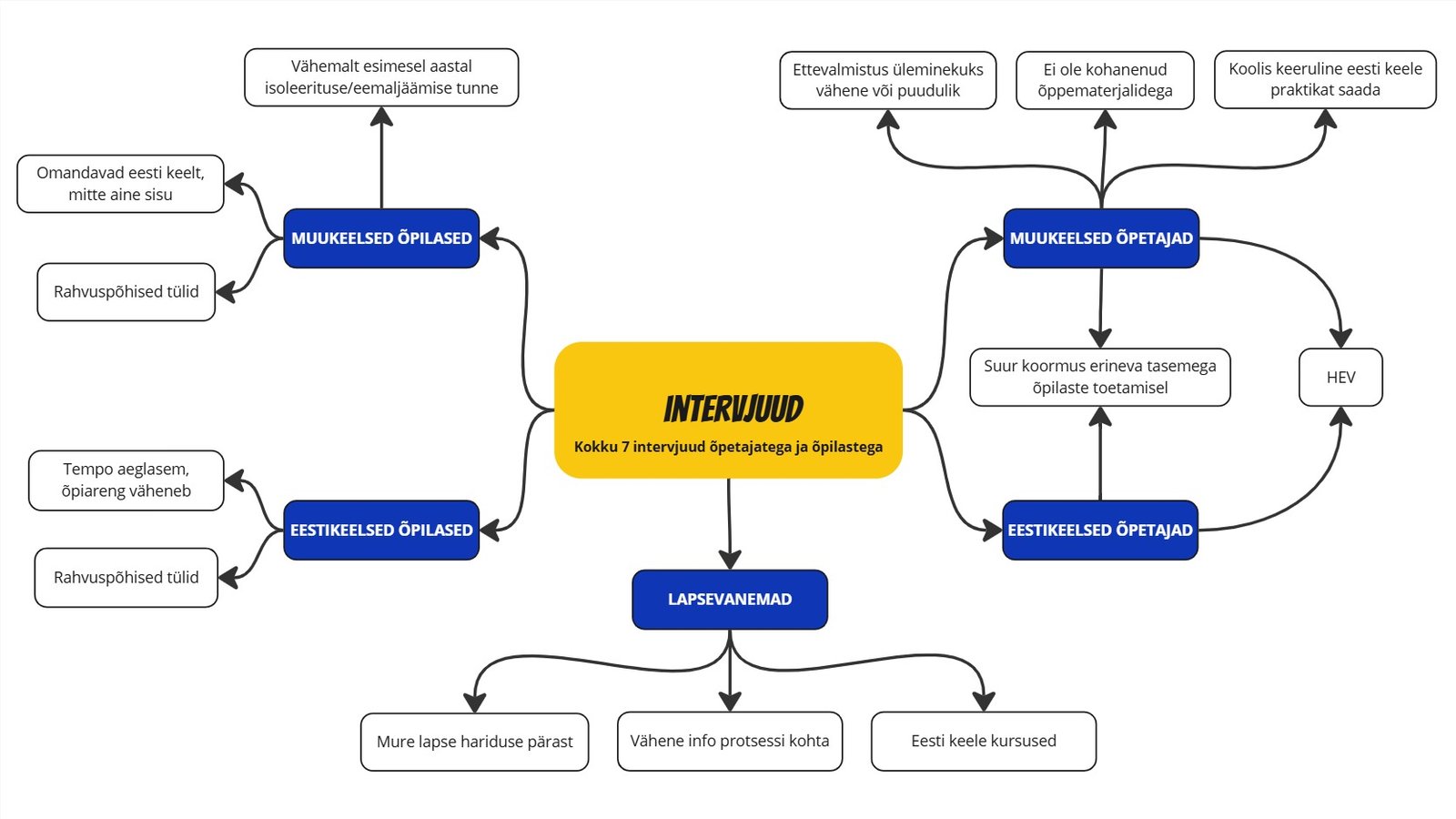
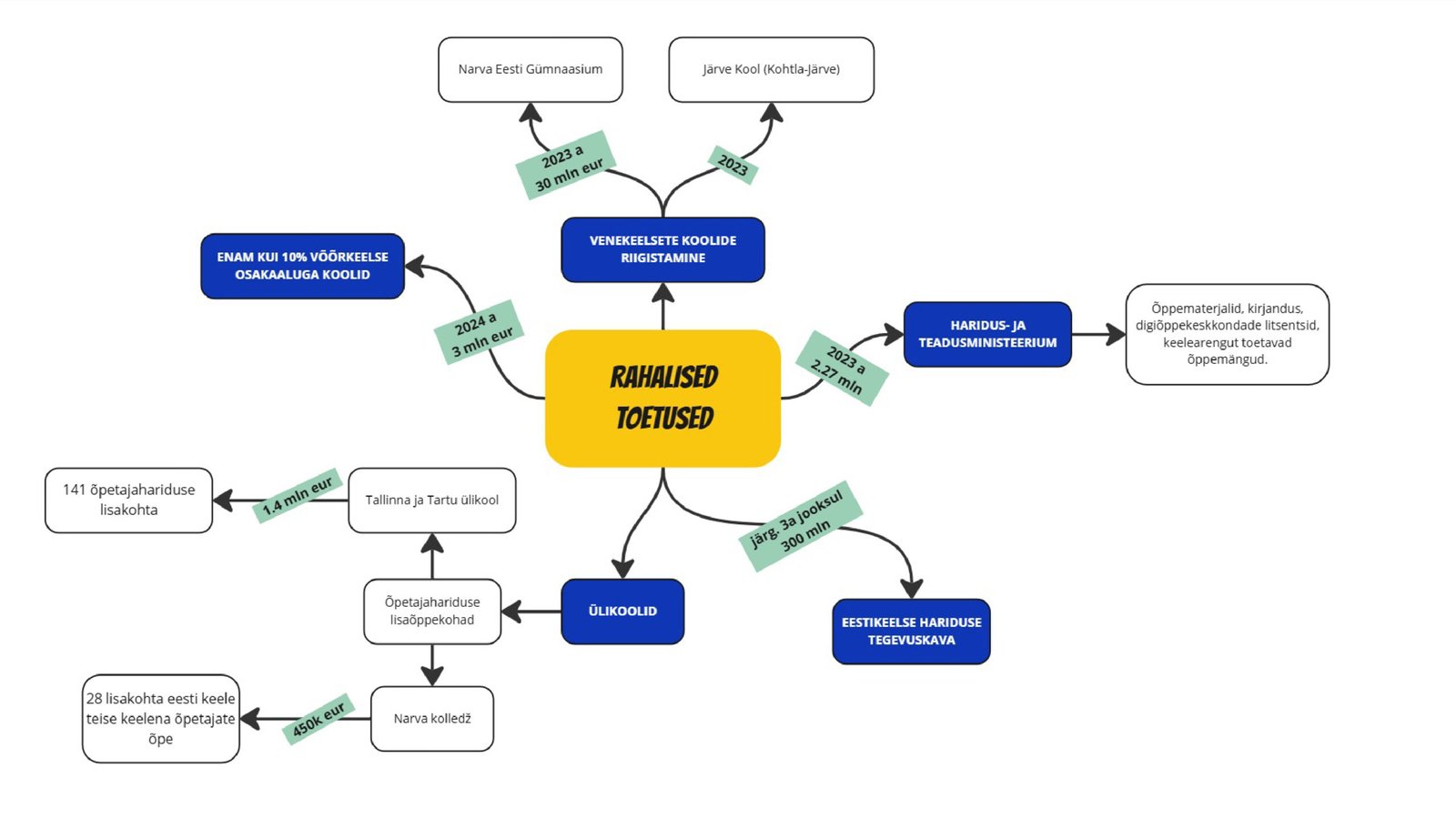
We began by researching the topic through statistical data, education laws, and interviews with both teachers and students. Our research revealed that amongst the challenges that occur with language barriers, one of the biggest struggle was creating suitable learning materials in Estonian.
Learning to speak verbally is one thing, but constructing specific and structured learning documents can be a challenge. While they may know their subject well, preparing materials for each lesson requires significant time and effort.
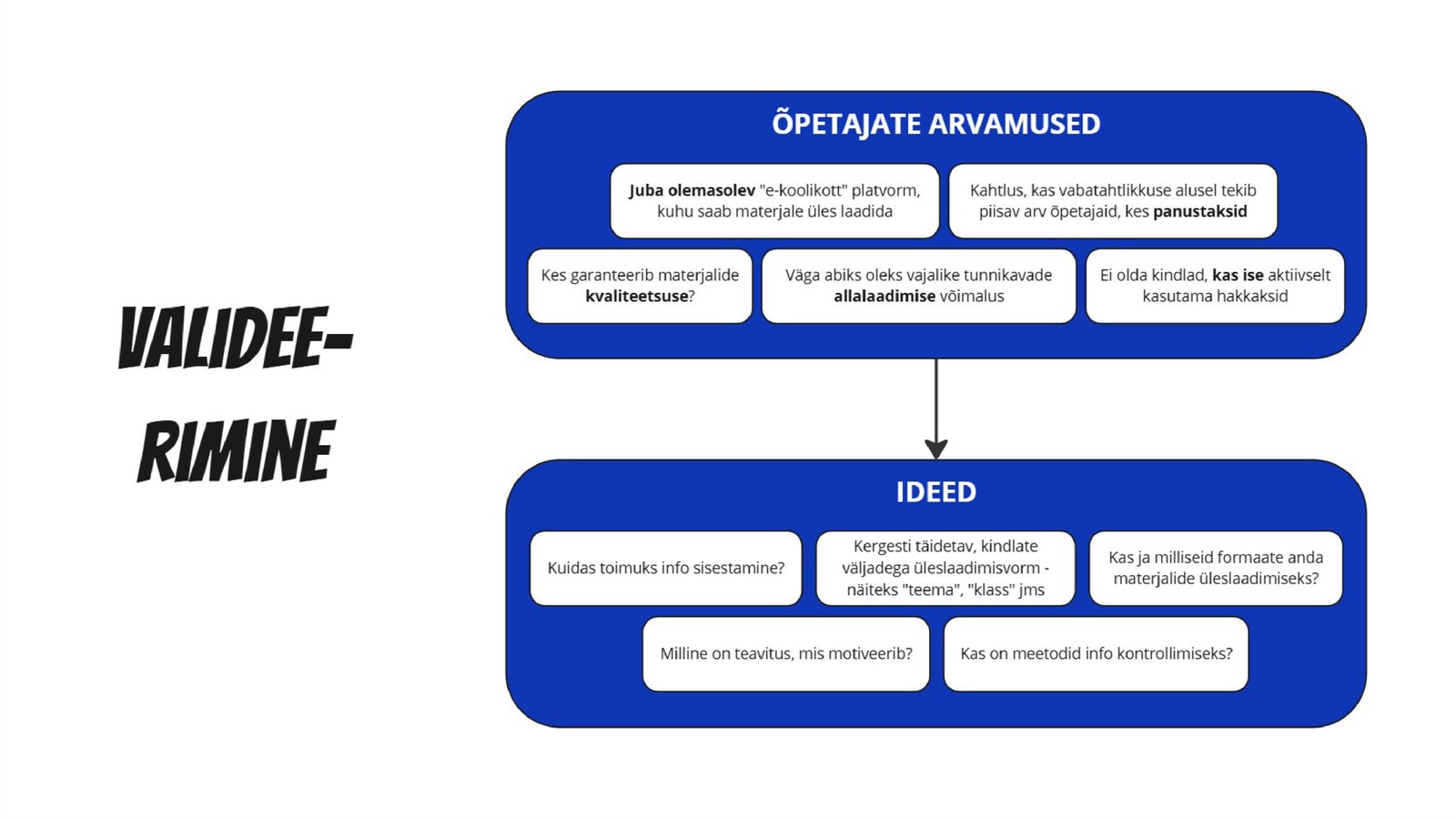
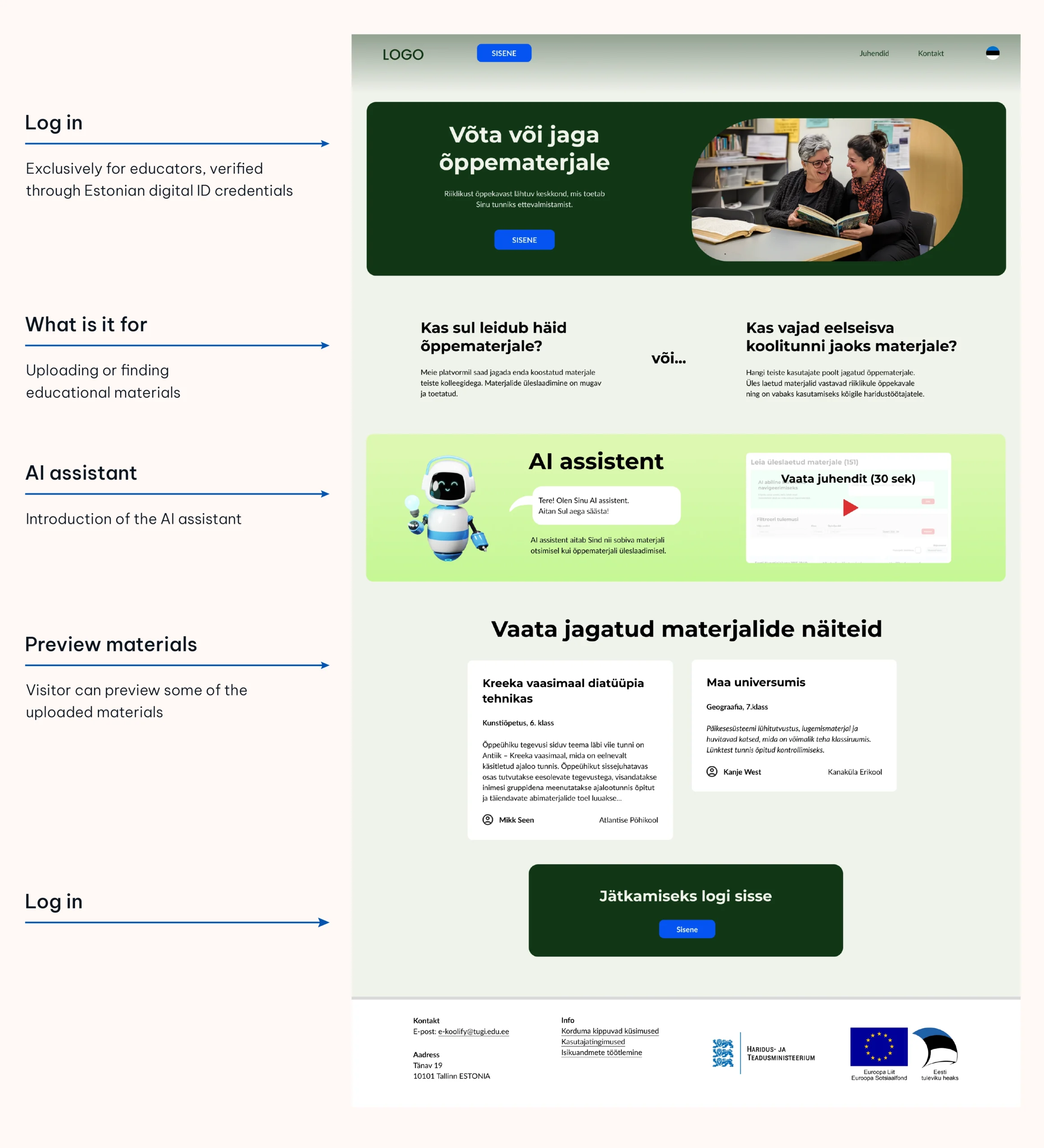
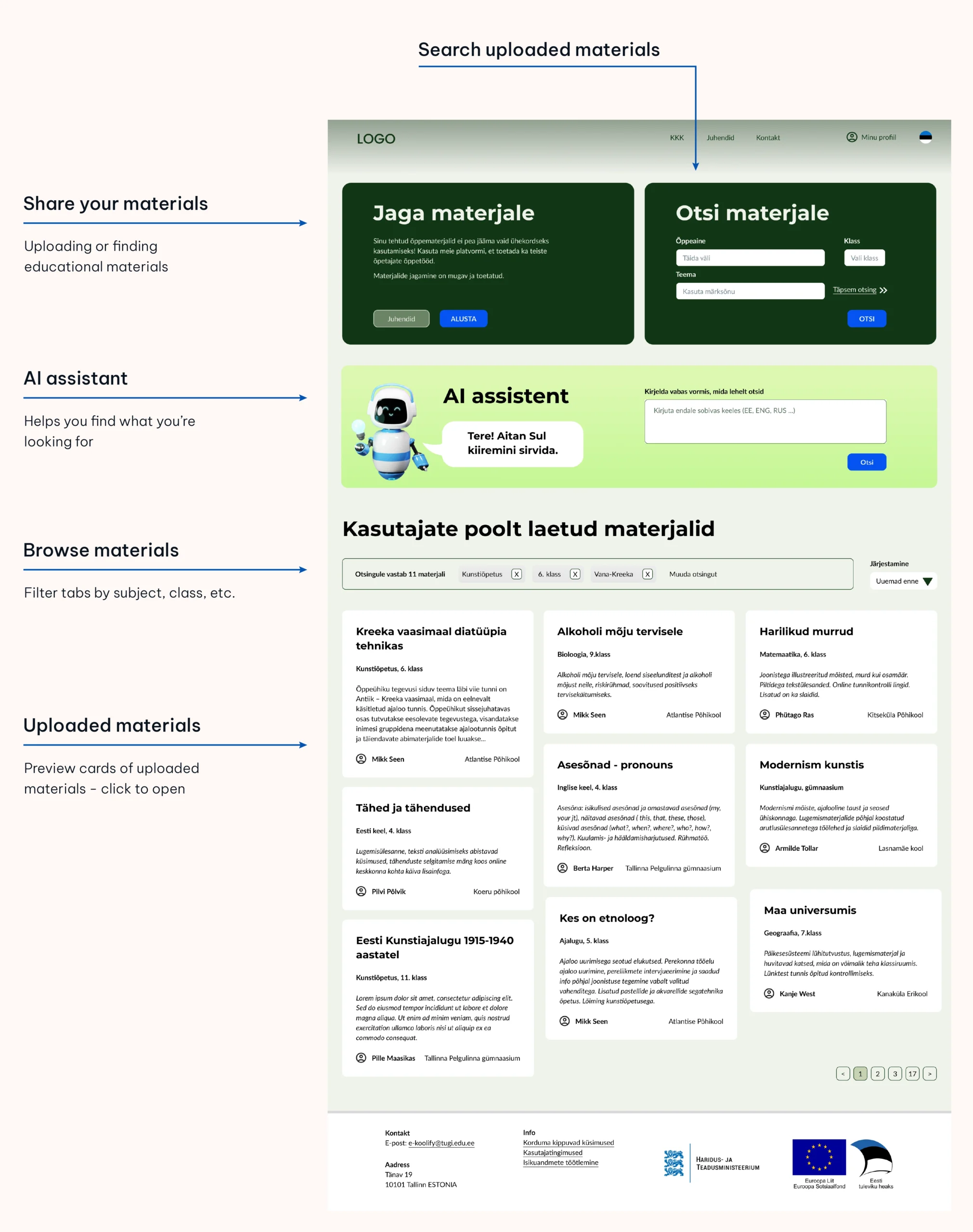
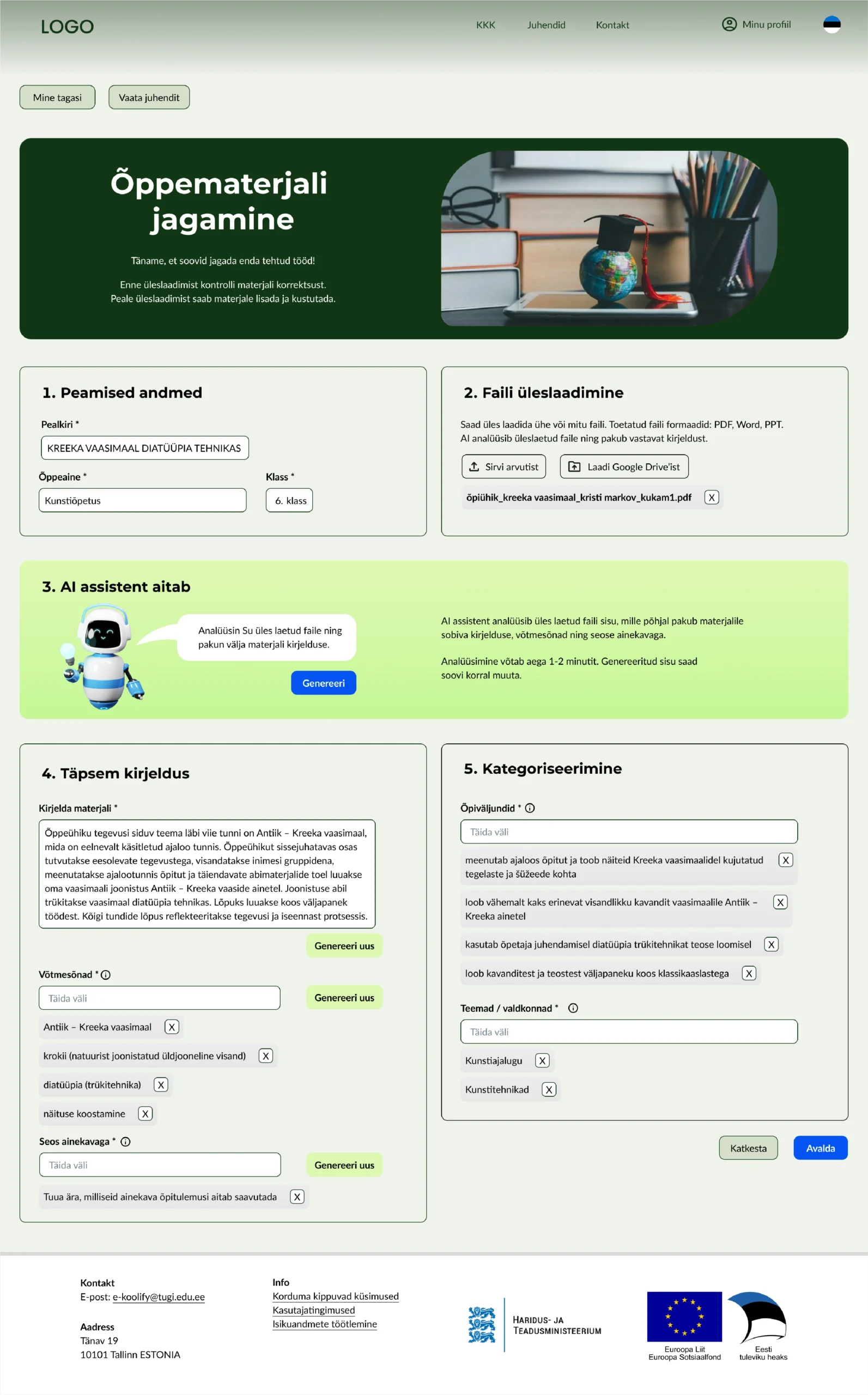
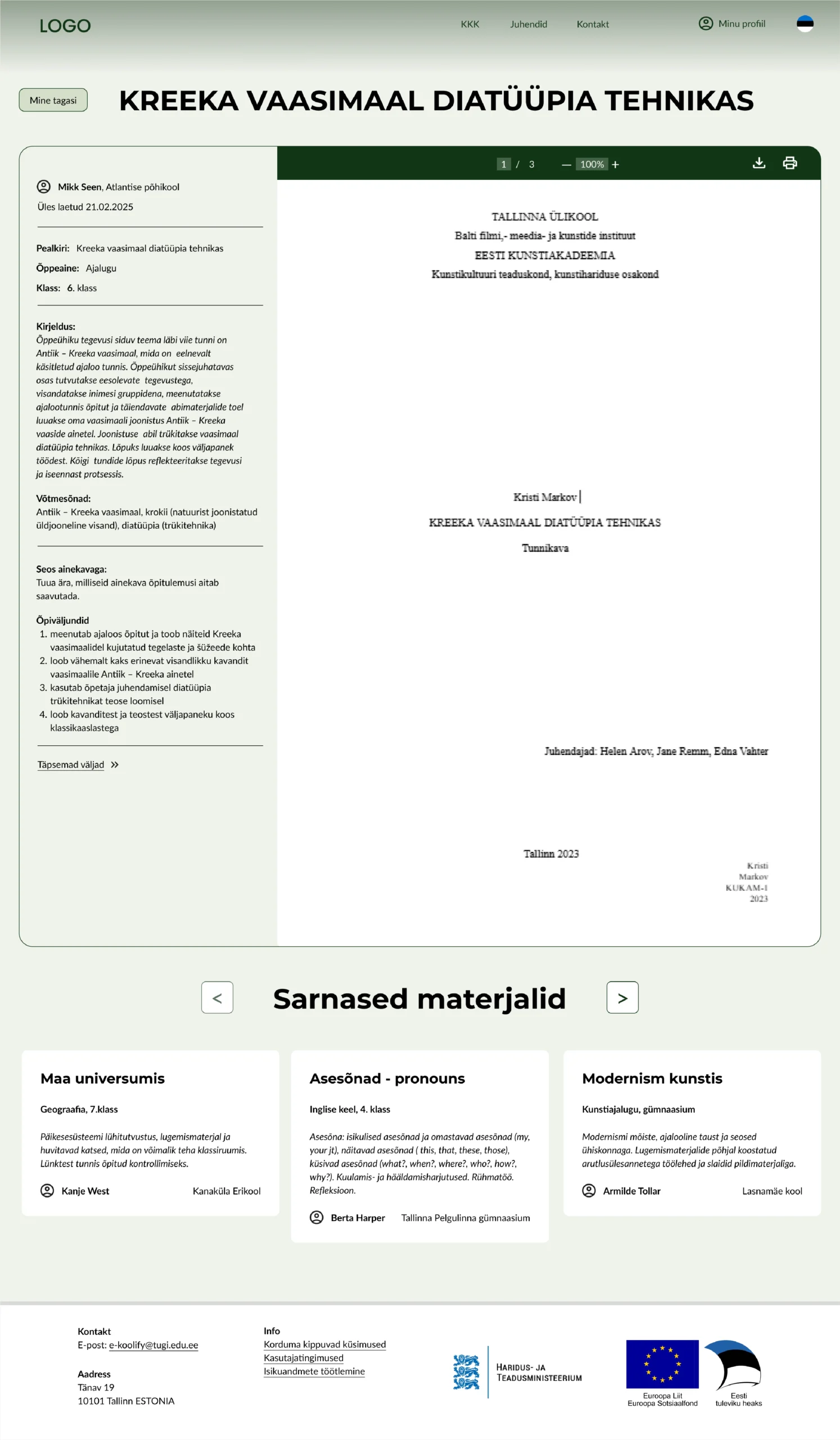
While teachers across the country are preparing class materials anyway, we thought – why not create a platform where they can share their documents with others? As a solution, we designed a web platform where teachers can do just that. That way, all the time and effort that goes into preparing materials is no longer for just one time use. While it is most beneficial for non-natives, it can also be a timesaver for just about any teacher in the country.
The goal was to develop a fully structured Figma prototype with sound information architecture and user flows, prioritizing logic and usability over visual polish. The platform includes an AI assistant that helps teachers upload and organize documents. Since uploading materials requires specific formatting and categorization, the assistant simplifies the process for teachers who may not have strong technical skills.